We'll start with some interesting news on crime:
"Where can I get a bag?" there has been a recent spate of arrests involving marijuana use here in Japan, most notably being the two sumo wrestlers that were arrested. If I understand correctly, it is not illegal to cultivate marijuana in Japan if you are a Shinto priest. It's not that Shinto advocates the smoking of marijuana, but the use of the plant is necessary for certain ritual purposes. By far, the most abused drugs in Japan are alcohol and amphetamines. In fact, amphetamines were such a problem in the wake of the War in the Pacific that it is illegal to have over the counter cold medicines like Nyquil or Sudafed here because of their potential use in manufacturing meth.
The Elderly Life of Crime - Japan's population is becoming lopsided, with the fastest-growing section of the population being those over the age of 65. Meanwhile, fewer and fewer babies are being born. This means that the university system here is becoming bankrupt, and that health care and social security measures for the elderly are being eroded because the State is reducing the funding for these programs. In response, more and more of the elderly are becoming criminals. I am having hard time finding a better example of why poverty is such a major concern. Typically poverty looks like distended bellies in a remote part of the globe, but the reality is that poverty is pernicious and ubiquitous. And sometimes a rational response to poverty is crime. Being a prisoner here provides not only three hots and a cot, but it also provides a reliable schedule of tasks to be completed and a consistent relationship between those that are jailed and those that treat them within the criminal justice system. Many of these criminal elderly lack precisely these cornerstones to personhood as conceived here in Japan.
Google and the Battle for Nihongo - Google Trends, that fun-filled zeitgeist site is doing well here in Japan. I think it's really interesting to see the rise of English education in Japan and the concomitant rise in katakana-izing Japanese. For those that don't know, the Japanese have a special syllabary (they don't use an alphabet, but combinations of consonants and vowels) so that they can recreate the sounds of foreign languages. As an example my name is Paul but the Japanese don't have an "L" sound in their syllabary so to get as close as they can to my name it becomes Po-Ru. Once you know how to read katakana you would be amazed at how much you can get done here in Japan. That doesn't mean that you can write very much, though. For reading and speaking, katakana is very powerful; for writing and more "adult" reading you must really know hiragana and kanji. Hiragana are the native Japanese syllabary, taken from Chinese characters, and it is from these that katakana are developed. Kanji are the Japanese versions of Chinese characters (hanji). Kanji are awesome for communicating complicated ideas and are simply necessary to be considered as educated as a high school student. But, katakana are used to communicate foreign words (and so, ideas) and this exoticism is tres chic among the younger Japanese. So, even native things get katakana-ized but there is the potential erosion of the use of kanji which is a star in the constellation of cultural artifacts, like Shinto, or natto, that makes the Japanese "Japanese." This "Japanese"-ness is a constant talking point among the Japanese. As an American it's hard for me to relate because when I learn about America I learn about 250 years - the Japanese learn about a period that is nearly ten times as long.
Mail-a-Squid - It seems counter-intuitive that a society that stresses the collective as the Japanese do should simultaneously be so fanatical about the local. The best paradigm for understanding this phenomena (again, part of what makes Japan so "Japanese") is Thomas Kasulis' Intimacy or Integrity. In the above article we learn about the Wakayama Prefecture's fishing cooperative that is trying to promote interest in their region by selling New Year's (a family time like Thanksgiving and Christmas combined) greeting cards made out of dried squid. Dried squid is like the beef jerky of America - ubiquitous.
And Speaking of Processed Meats That Are Ubiquitous in Okinawa - Aww, Spam. The world economy is in a profound shift (which looks like apocalypse for Wall Street) and when the U.S. has to tighten its belt, it also buys a ton of canned meat. This canned meat tendency goes wherever poorer Americans go and Okinawa has become a major Spam-eating center.
Showing posts with label Food. Show all posts
Showing posts with label Food. Show all posts
Monday, November 17, 2008

Friday, November 14, 2008
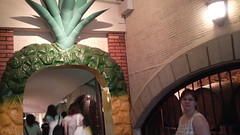
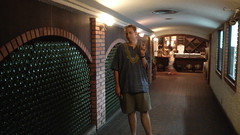
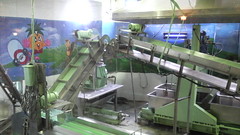
Nago's Pineapple Park!
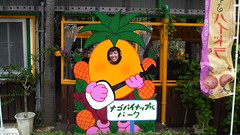
Back in May we had some guests visit from overseas. We took them to the best place we could think of: Nago's Pineapple Park. Classic.
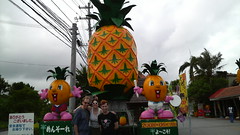
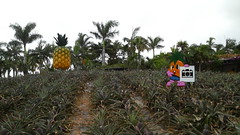
You get there and can take an electric golf cart from the future which drives itself around a field of pineapples while you are guided by "Pineapple herself" telling you interesting things about pineapples.
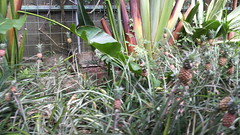
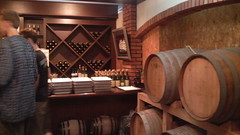
Then you get bombarded with pineapple products. The wine ain't all bad, but this is something you want to share with a lot of people so that you only have to drink a little. The best was the pineapple white chocolate.
Two Things I Saw That I Wouldn't See in the States
I've long harbored a desire to be a new member of the Beastie Boys, and while driving through Naha I thought I'd found my chance when I saw:
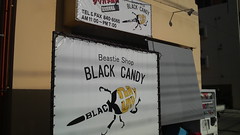
Black Candy, Beastie Shop.
Unfortunately it has nothing to do with the Beastie Boys and everything to do with Japanese fighting beetles! These were some of the coolest looking bugs I've ever seen, and they were hundreds and hundreds of dollars! Every year in the mainland there is a big tournament where the kids can have their beetles wrestle. Apparently these tournaments are a source of financial loss for many in the Ryukyus.
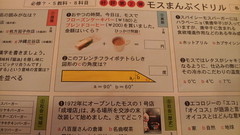
The other thing I saw here recently that I know I won't see in the U.S. any time soon was this:
This is the paper place mat that comes on the food tray your given at MOS Burger. MOS is like a WholeFoods-meets-McDonalds kind of fast food chain. If you click on the image and look closely you will see that not only are there all sorts of trivia questions on this mat, but there's even a geometry problem. I was so embarassed at my complete lack of ability in mathletics.
Kumejima!
We went to beautiful Kumejima last month to run the 10k portion of their annual marathon. I cannot recommend enough to those of you in the area this race. Hands-down this was the most generous race I've participated in: we were given really nice technical shirts (not the usual cotton tshirt), each of us got a bottle of Kumesen awamori, we got free cookies, and we were given a coupon for 400 yen to use in the food booths after the race was finished. Nice!
Kumejima is west of Okinawa honto, we took the Kumejima ferry from the port in Naha and the trip was about 3 hours. This is a great ferry ride because you pass several other isladns, like Tokashiki and so it feels nice and scenic.
The ferry leaves the port around 8:30 and arrives in Kumejima around noon. We checked into a nice place that had two seperate guest houses. Ours was closer to the Eefu イフ beach and had two seperate rooms and boathrooms. The rooms were just down the street from an internet cafe/video/moped rental place, Lucky Gate.
 (ain't much in Kumejima)
Heads-up for lunch: the restaurants in the staging area all keep seperate lunch and dinner hours. That means you should really put your stuff down in the hotel and get to a restaurant before they close at 1pm. We found a nice place, just down from Lucky Gate (my only point of reference now) that was open after 1:30 and we had what chicken tastes like:

We went down to the beach but the coral had all died out (which is becoming increasingly true around the islands). That said, the water was like a bath and the nearby hilss made it quite scenic. I later noticed after my swim the sign that warns about warm water=more jellyfish. Not that I'm saying ignore these signs, but, I've only seen one jellyfish in the Okinawa area during my snorkelings around the island. I think the signs should be heeded, but not keep you from swimming.
On the way back from the beach I saw a couple of bits of grafitti from GUN, who seems to own the entire Ryukyuan Kingdom.

We tried to rent a moped so we could explore the island, but the number of tourists running the race the next day meant that there were no mopeds for us. So, we rented a car and drove around the island. I really dropped the ball and didn't take nearly enough pictures while we were there (which was really only 24 hours). Kumejima has a large number of traditional wooden houses in the Ryukyuan style and they're just gorgeous to take in. If you've been to Ryukyu Mura (the traditional Ryukyuan village theme park) and been inside these homes in the summer you know how awesome they are. Driving around I even saw an owl.
One of the coolest things I've seen in nature has to be the Kumejima Tatami Ishi. These are cross sections of volcanic basalt columns that look like neatly-arranged tatami or turtle carapaces:


There are much better pictures of these online, so I recommend googleing them.
I learned later that after the Japanese took control of the Ryukyu Kingdom during the 19th century they exiled many of the royals to Kumejima.
Kumejima is west of Okinawa honto, we took the Kumejima ferry from the port in Naha and the trip was about 3 hours. This is a great ferry ride because you pass several other isladns, like Tokashiki and so it feels nice and scenic.
The ferry leaves the port around 8:30 and arrives in Kumejima around noon. We checked into a nice place that had two seperate guest houses. Ours was closer to the Eefu イフ beach and had two seperate rooms and boathrooms. The rooms were just down the street from an internet cafe/video/moped rental place, Lucky Gate.
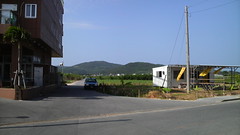 (ain't much in Kumejima)
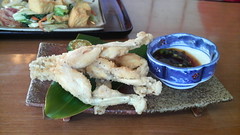
Heads-up for lunch: the restaurants in the staging area all keep seperate lunch and dinner hours. That means you should really put your stuff down in the hotel and get to a restaurant before they close at 1pm. We found a nice place, just down from Lucky Gate (my only point of reference now) that was open after 1:30 and we had what chicken tastes like:
We went down to the beach but the coral had all died out (which is becoming increasingly true around the islands). That said, the water was like a bath and the nearby hilss made it quite scenic. I later noticed after my swim the sign that warns about warm water=more jellyfish. Not that I'm saying ignore these signs, but, I've only seen one jellyfish in the Okinawa area during my snorkelings around the island. I think the signs should be heeded, but not keep you from swimming.
On the way back from the beach I saw a couple of bits of grafitti from GUN, who seems to own the entire Ryukyuan Kingdom.
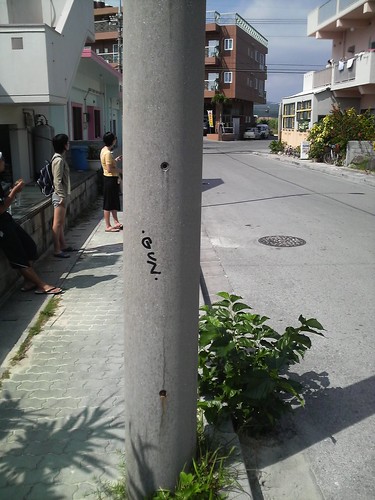
We tried to rent a moped so we could explore the island, but the number of tourists running the race the next day meant that there were no mopeds for us. So, we rented a car and drove around the island. I really dropped the ball and didn't take nearly enough pictures while we were there (which was really only 24 hours). Kumejima has a large number of traditional wooden houses in the Ryukyuan style and they're just gorgeous to take in. If you've been to Ryukyu Mura (the traditional Ryukyuan village theme park) and been inside these homes in the summer you know how awesome they are. Driving around I even saw an owl.
One of the coolest things I've seen in nature has to be the Kumejima Tatami Ishi. These are cross sections of volcanic basalt columns that look like neatly-arranged tatami or turtle carapaces:
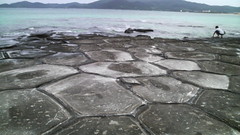
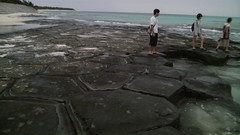
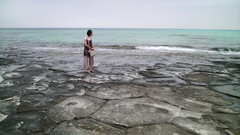
There are much better pictures of these online, so I recommend googleing them.
I learned later that after the Japanese took control of the Ryukyu Kingdom during the 19th century they exiled many of the royals to Kumejima.
Food Security in Japan
I got this video from Matt Armstrong's awesome public diplomacy blog, MountainRunner.
Friday, October 3, 2008
Rice!
Rice is central to Japanese life. Even so here in Okinawa, where it's too hot to grow rice (and it takes so much water that it's not realistic to cultivate much rice here).
How central?
The word for rice is the same word for meal. That's how important.
Wanna know what rice looks like when it's harvested?

and it smells AWESOME! It's sweet and kinda nutty smelling.
My labmate recently visited her family in Tokyo and participated in a harvest there, so I have had the pleasure of learning more about rice.

Here's what rice looks like before it's, I dunno, husked? Then the rice is polished until it is super white. I prefer the less refined brown rice 玄前(genmae) but it is more expensive because so many rice distributors manufacture the highly-polished white rice (which is necessary for ritual life here in Japan).
Wanna see what happens when the American military occupies (I mean protects) your island for over 60 years?

You get delicious Taco Rice!
Taco rice is basically a taco from taco bell unfurled from it's shell onto a bed of rice. When I read that before I came to Okinawa I thought, "Really?" as in, "Really, people will eat that?" But I am now a convert: taco rice is oishii (delicious).
Particularly from this place in Onna - Kijimuna きじむな where they have letters patent on taco rice.
How central?
The word for rice is the same word for meal. That's how important.
Wanna know what rice looks like when it's harvested?

and it smells AWESOME! It's sweet and kinda nutty smelling.
My labmate recently visited her family in Tokyo and participated in a harvest there, so I have had the pleasure of learning more about rice.

Here's what rice looks like before it's, I dunno, husked? Then the rice is polished until it is super white. I prefer the less refined brown rice 玄前(genmae) but it is more expensive because so many rice distributors manufacture the highly-polished white rice (which is necessary for ritual life here in Japan).
Wanna see what happens when the American military occupies (I mean protects) your island for over 60 years?

You get delicious Taco Rice!
Taco rice is basically a taco from taco bell unfurled from it's shell onto a bed of rice. When I read that before I came to Okinawa I thought, "Really?" as in, "Really, people will eat that?" But I am now a convert: taco rice is oishii (delicious).
Particularly from this place in Onna - Kijimuna きじむな where they have letters patent on taco rice.
Tuesday, August 19, 2008
ぜんざい Zenzai!!!!
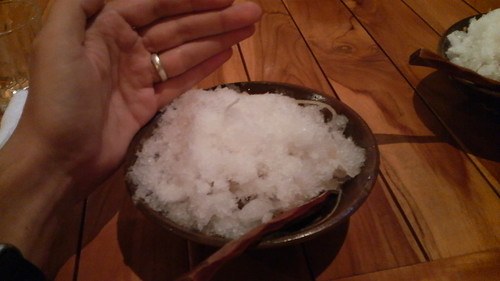
Zenzai is not an esoteric branch of Buddhism, it does not require you to contemplate a koan.
It simply requires that you enjoy the coolness that this Okinawan desert offers to beat the heat. But, I'm going describe something that you're going to think is repulsive. After moving here I realized that I know next to nothing about Japanese cuisine (even less about the rest of East Asian food) and maybe I understand why now: were you to write an article about it, no one in America would eat it.
Hell, look at sushi. I work with gaijin that, although they live here, refuse to eat sushi, because it's raw. I can't believe it.
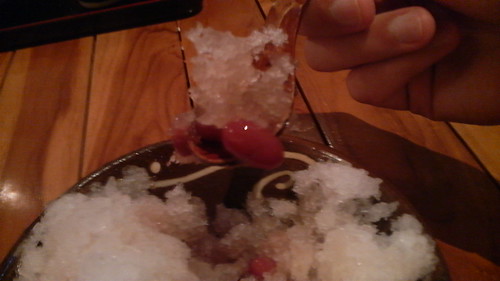
Anyhow, this summer I've picked up another research project: finding the most delicious zenzai on the island. I'll let you know who the winner is later in the year.
So what is zenzai? Take a look:
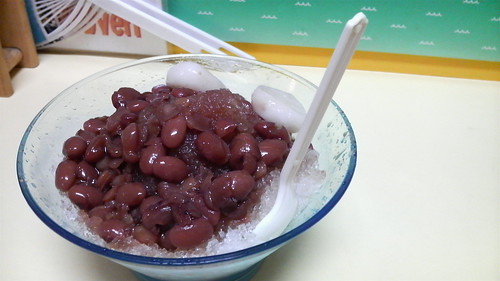
Okinawan zenzai is made from shaved ice, little balls of mochi (which is a really sweet rice ball-type-cake), sometimes condensed milk (so sweet and yummy), and kidney beans that have been stewed in a sweet syrup.
I hadja until then, huh?
"Sweet kidney beans? Don't we make spicy chili in a tomato sauce out of kidney beans?"
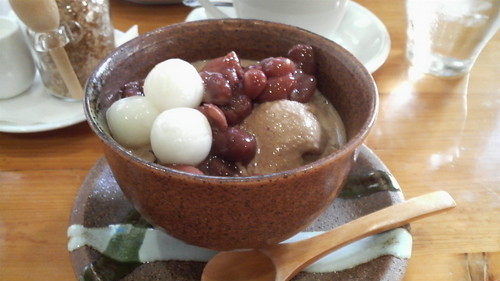
Yeah, but you'll just have to trust me that zenzai is awesome. Below is my favorite zenzai recipe so far, from Blue Dog Cafe in Takahara, it features a coffee/cocoa base. Yummadumdum!
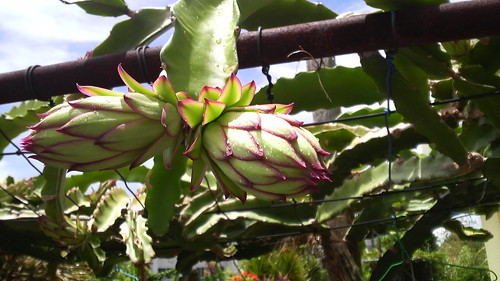
The Amazing (& Delicious) Dragon Fruit
I moved here and was convinced by the phrase "sub-tropical environment" that I would be eating mangoes and papayas and all manner of delicious fruit all the time. But that's just not the case.
The soil of Okinawa just isn't that rich and the fresh water supply is not that consistent, apparently. So, the farmers have taken a very conservative approach to cultivating new crops: stick with what we know works-kind of thinking.
So, while mangoes do in fact grow here, they are quite expensive (like $60!) because they can be sold to the mainlanders on export very profitably.
What does grow here that is delicious and this summer is cheap and everywhere is the dragonfruit:

You split them down the middle to reveal something that looks like a beat and a potato with lots of seeds and super juicy:

cut this in half (so you've quartered the dragonfruit) and you should find that you can basically peel the fruit out of it's skin:

then dig in! Be aware that these things will stain so maybe use a utensil:

I'd been seeing what I thought were just enormous cacti in everyone's gardens this spring but now I know that they are the source of this delicious fruit:

all's I can say is おいしいそう! (oishii so, it looks delicious!)

The soil of Okinawa just isn't that rich and the fresh water supply is not that consistent, apparently. So, the farmers have taken a very conservative approach to cultivating new crops: stick with what we know works-kind of thinking.
So, while mangoes do in fact grow here, they are quite expensive (like $60!) because they can be sold to the mainlanders on export very profitably.
What does grow here that is delicious and this summer is cheap and everywhere is the dragonfruit:

You split them down the middle to reveal something that looks like a beat and a potato with lots of seeds and super juicy:
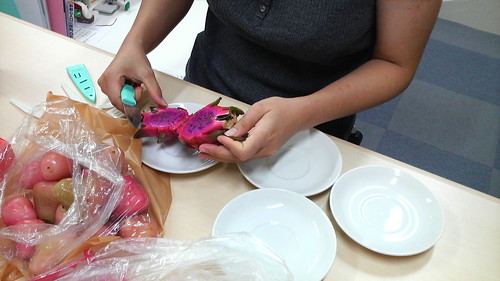
cut this in half (so you've quartered the dragonfruit) and you should find that you can basically peel the fruit out of it's skin:
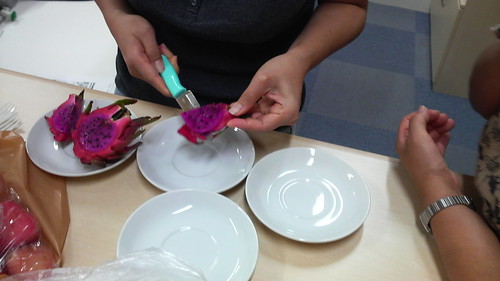
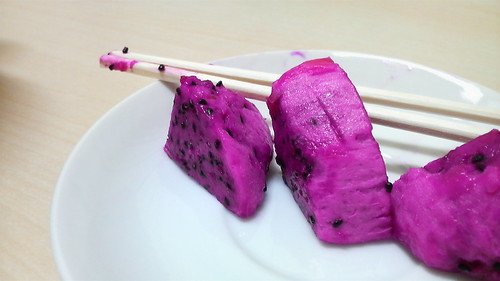
then dig in! Be aware that these things will stain so maybe use a utensil:
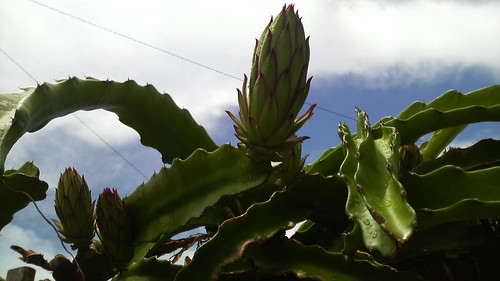
I'd been seeing what I thought were just enormous cacti in everyone's gardens this spring but now I know that they are the source of this delicious fruit:
all's I can say is おいしいそう! (oishii so, it looks delicious!)
Monday, July 14, 2008
Eating in Okinawa
Here's a little bit about what my diet looks like here in Okinawa
Okonomiyake

"Okonomiyake? Have you tried it? It's like a Japanese pancake." This is how I've heard a few Japanese folks explain this delicious little number. This is really more of an Osaka food, and I've only had Okonomiyake in Kansai Airport, so I may not have the best frame of reference... still, I thought that the Okonomiyake place in Misato was awesome. Rumor has it they're moving to Takahara, which is much closer to where I live. Here's another photo to give you an idea of what's in it (basically everything):

Nothing about the above suggests pancakes to me, but then I was looking through my photos and remembered what the pancakes at Caracalla in Chatan look like:

Even includes ice cream on top. So maybe Okonomiyake and pancakes are a lot alike. We prefer ice cream, fruit, and syrup; they prefer octopus, mayonaise, scallions, and slightly sweet soy sauce.
Cook It Yourself
You saw it in Lost In Translation, and it's true: they make you cook your own meal, sometimes. Actually, you have that option at the Okonomiyake place above. Here are some other CIY foods:
Hiroshima-style Noodles
They're so nice they left this little card in eigo (English) for us


 Basically, you get to make your own broth. You pick, to some extent what will go in your soup, but you get to really jack up the spice if that's your style.

Yaki Nikku
Wanna grill out, but you don't have a lawn, or a grill, and you don't have anyone over to your house? Yaki Nikku to the rescue. There are many yaki nikku places here in Okinawa and for the most part it's the same game: order meat you like cooking, order vegetables that you like cooking, and, voila, your paying to do the job of chefs across America!


Above left is the plate o' steak (very thin, so try not to overcook) and then a little duck and steak cooking.
Food from Other Places
The Japanese are really into eating food from everywhere else, so long as it has mayonnaise included (I'm told it's the younger generation that are responsible for all the mayo, I'm just sayin the learned it somewhere).
There's Thai:

and Mexican:
 This is a burrito that has been deep fried, topped with avocado and served with a sesame/mayo dressing. Que Sabroso!
You can even get French-ish foods, like croissants stuffed with hot dogs

Also Featuring Hotdogs
Try the uma no suteki up in Kin Town at Gate One, it comes with a tempura (which is a Portugese food, actually) hotdog, that is, a lightly breaded, deep fried hot dog:

Food from Here
You're in Okinawa, you have to have Okinawa Soba, once you know how to read "soba" in hiragana, you will realize that you are surrounded by shops that sell Okinawa Soba.
"But I thought soba was from Japan, not just Okinawa."
You're right, but in the mainland, soba is made from buckwheat and so the noodles are brown with a slight purplish color to them. In Okinawa they use something other than that, they look like thick spaghetti, and, unlike in the mainland, Okinawa soba is served hot. The Okinawans are known for their pork and so your soba will undoubtedly have a nice hunk of it in there:

 This one also has fish cake in it. I don't know, just eat it. Be sure to put a nice dose of the Awamori hotsauce (next to the bones bowl in the left picture) in their as well as some chili pepper. When you're done put the bones in the little bowl that comes with it, feel free to suck the marrow, it's oishii (delicious)!
Didn't You Say Horse a Minute Ago?
I sure did, sir. Uma nikku (horse meat) is not really popular, but it is available, just like goat (yagi) you can get it as a sashimi (thinly sliced and raw). You will hear frmo me when I have uma sashimi, I promise.

Uma Suteki (horse steak) with tempura hot dog
Below, Yagi Sashimi (thinly sliced raw goat meat)

Really the horse steak was just alright: it was slathered in an A-1 type of sauce and so I wasn't really to pick up on any major gaminess or anything. The texture of the steak was a bit different though. It was more lean and there was more sinew in there than you get with beef. Maybe this was most like minute steak. The goat sashimi, however, was off the hook! You have to have it with the skin on their because that hide texture makes the whole experience amazing.
That's a lot of Meat
Yeah, so maybe you want to try something a little more heart healthy, like this taste kimpira rice burger from MOS Burger. Kimpira is a medley of root vegetables (burdock root, lotus root, carrot) that are marinated in what I think is soy sauce then served on two rice patties with a sheet of sea weed instead of a leaf of lettuce. This is definitely my favorite food at MOS:

Or maybe you want to cook. It's the summer time so right now you can monster sized Moui (Mo-ee). It looks like and is about the size of a water melon. It is also known as winter melon and is used in a lot of Chinese cooking. Just peel it, slice it to about 3 cm and cook with carrots and mushrooms and a generous helping of salt. Be sure to ladle out the bitterness that will clump at the top of the broth as it boils.

How About Fruit?
I'm glad you asked. Being from the States, I am accustomed to the most ridiculous variety of fruits and vegetables available to me at any time of year. Now that gas prices are climbing I'm glad I've moved to a part of the world that respects a little more the basic truth that you can't get oranges all year long, you just can't. Eat local. It sucks, but that's how nature intends it.
Here are some fruits that will be available in Okinawa at some point or another:
Biwa


Biwa is known as loquat and is related to the kumquat. Both are of Chinese orgin. Loquat (biwa) is perhaps the most delicious thing I've eaten this year so far. Simply peel the skin (you can use your fingers) and reveal this small little peach looking fruit. In the center is a large stone like a lychee's pit. Don't eat it.
Mikan
These are like clementines and are also known as mandarin oranges. If you've only had mandarin oranges from a can, let me tell you something: you are missing out. Mikans are easy to peel and are like tiny drops of citrus-flavored sunshine.

Passion fruit
Oh man, late June/early July is passion fruit season. I thought this was a made up fruit, something that Snapple and Sobe concocted in a factory near the New Jersey shore. I am delighted to inform you that I was really wrong.


You'll know the passion fruit is ready when the skin starts to feel like it is wrinkling (like when your fingers get all pruny in the bath tub or when you're snorkeling)
Cut the little guy in half and grab a spoon to slurp out this amazing fruit. If it's a little sour, try it with honey.
Rose Apple
or renbu (レンブ), maybe denbu (デンブ) This is a strange fruit. You have to soak it in water for a few hours because there are more than likely many ants inside it. Once you've taken care of that you've got this bell-shaped fruit that tastes a little like a sour apple with the firmness of celery. You can put it on a salad for a nice little something.


Desert
You're in Okinawa, it's really hot here, you want desert but the idea of eating one of those faux cheesecakes that everyone sells is nauseating, why not have Okinawa zenzai. Just like with soba, Okinawa has taken something from the mainland and done something better.


Zenzai is a mixture of adzuki beans (the red beans of red bean paste fame) and mochi and shaved ice. It sounds gross, but it's really the only thing other than snow cones that cures what ails me in the summer time here. The best part is the little mochi ball (sweetened, pounded, super chewy rice dough).
Somethings I Just Can't Eat Yet
In the U.S. we will usually have beer and maybe some queso dip, or some pretzels, or some peanuts. Here you can have smoked almonds and... yes, smoked fish:

Mayonnaise, the Food Group
Maybe you are in the mall and you want something to eat, something pasta-y but also combining an aesthetic that the gaijin just won't get. Why not try this?
 Mayonnaise sauce with Cod Ovum and seaweed on noodles.

Or maybe this crepe stuffed with tuna salad and maybe (shudder, shudder) chocolate ice cream?
No?
Maybe just tuna and mayonnaise crepe?

I saw this in Kansai and thought it was something else, now I know it's just Jingrish:
 it says Ass, but it should be asparagus.
Okonomiyake

"Okonomiyake? Have you tried it? It's like a Japanese pancake." This is how I've heard a few Japanese folks explain this delicious little number. This is really more of an Osaka food, and I've only had Okonomiyake in Kansai Airport, so I may not have the best frame of reference... still, I thought that the Okonomiyake place in Misato was awesome. Rumor has it they're moving to Takahara, which is much closer to where I live. Here's another photo to give you an idea of what's in it (basically everything):

Nothing about the above suggests pancakes to me, but then I was looking through my photos and remembered what the pancakes at Caracalla in Chatan look like:

Even includes ice cream on top. So maybe Okonomiyake and pancakes are a lot alike. We prefer ice cream, fruit, and syrup; they prefer octopus, mayonaise, scallions, and slightly sweet soy sauce.
Cook It Yourself
You saw it in Lost In Translation, and it's true: they make you cook your own meal, sometimes. Actually, you have that option at the Okonomiyake place above. Here are some other CIY foods:
Hiroshima-style Noodles
They're so nice they left this little card in eigo (English) for us


 Basically, you get to make your own broth. You pick, to some extent what will go in your soup, but you get to really jack up the spice if that's your style.
Yaki Nikku
Wanna grill out, but you don't have a lawn, or a grill, and you don't have anyone over to your house? Yaki Nikku to the rescue. There are many yaki nikku places here in Okinawa and for the most part it's the same game: order meat you like cooking, order vegetables that you like cooking, and, voila, your paying to do the job of chefs across America!


Above left is the plate o' steak (very thin, so try not to overcook) and then a little duck and steak cooking.
Food from Other Places
The Japanese are really into eating food from everywhere else, so long as it has mayonnaise included (I'm told it's the younger generation that are responsible for all the mayo, I'm just sayin the learned it somewhere).
There's Thai:

and Mexican:
 This is a burrito that has been deep fried, topped with avocado and served with a sesame/mayo dressing. Que Sabroso!
You can even get French-ish foods, like croissants stuffed with hot dogs

Also Featuring Hotdogs
Try the uma no suteki up in Kin Town at Gate One, it comes with a tempura (which is a Portugese food, actually) hotdog, that is, a lightly breaded, deep fried hot dog:

Food from Here
You're in Okinawa, you have to have Okinawa Soba, once you know how to read "soba" in hiragana, you will realize that you are surrounded by shops that sell Okinawa Soba.
"But I thought soba was from Japan, not just Okinawa."
You're right, but in the mainland, soba is made from buckwheat and so the noodles are brown with a slight purplish color to them. In Okinawa they use something other than that, they look like thick spaghetti, and, unlike in the mainland, Okinawa soba is served hot. The Okinawans are known for their pork and so your soba will undoubtedly have a nice hunk of it in there:

 This one also has fish cake in it. I don't know, just eat it. Be sure to put a nice dose of the Awamori hotsauce (next to the bones bowl in the left picture) in their as well as some chili pepper. When you're done put the bones in the little bowl that comes with it, feel free to suck the marrow, it's oishii (delicious)!
Didn't You Say Horse a Minute Ago?
I sure did, sir. Uma nikku (horse meat) is not really popular, but it is available, just like goat (yagi) you can get it as a sashimi (thinly sliced and raw). You will hear frmo me when I have uma sashimi, I promise.

Uma Suteki (horse steak) with tempura hot dog
Below, Yagi Sashimi (thinly sliced raw goat meat)

Really the horse steak was just alright: it was slathered in an A-1 type of sauce and so I wasn't really to pick up on any major gaminess or anything. The texture of the steak was a bit different though. It was more lean and there was more sinew in there than you get with beef. Maybe this was most like minute steak. The goat sashimi, however, was off the hook! You have to have it with the skin on their because that hide texture makes the whole experience amazing.
That's a lot of Meat
Yeah, so maybe you want to try something a little more heart healthy, like this taste kimpira rice burger from MOS Burger. Kimpira is a medley of root vegetables (burdock root, lotus root, carrot) that are marinated in what I think is soy sauce then served on two rice patties with a sheet of sea weed instead of a leaf of lettuce. This is definitely my favorite food at MOS:

Or maybe you want to cook. It's the summer time so right now you can monster sized Moui (Mo-ee). It looks like and is about the size of a water melon. It is also known as winter melon and is used in a lot of Chinese cooking. Just peel it, slice it to about 3 cm and cook with carrots and mushrooms and a generous helping of salt. Be sure to ladle out the bitterness that will clump at the top of the broth as it boils.

How About Fruit?
I'm glad you asked. Being from the States, I am accustomed to the most ridiculous variety of fruits and vegetables available to me at any time of year. Now that gas prices are climbing I'm glad I've moved to a part of the world that respects a little more the basic truth that you can't get oranges all year long, you just can't. Eat local. It sucks, but that's how nature intends it.
Here are some fruits that will be available in Okinawa at some point or another:
Biwa


Biwa is known as loquat and is related to the kumquat. Both are of Chinese orgin. Loquat (biwa) is perhaps the most delicious thing I've eaten this year so far. Simply peel the skin (you can use your fingers) and reveal this small little peach looking fruit. In the center is a large stone like a lychee's pit. Don't eat it.
Mikan
These are like clementines and are also known as mandarin oranges. If you've only had mandarin oranges from a can, let me tell you something: you are missing out. Mikans are easy to peel and are like tiny drops of citrus-flavored sunshine.

Passion fruit
Oh man, late June/early July is passion fruit season. I thought this was a made up fruit, something that Snapple and Sobe concocted in a factory near the New Jersey shore. I am delighted to inform you that I was really wrong.


You'll know the passion fruit is ready when the skin starts to feel like it is wrinkling (like when your fingers get all pruny in the bath tub or when you're snorkeling)
Cut the little guy in half and grab a spoon to slurp out this amazing fruit. If it's a little sour, try it with honey.
Rose Apple
or renbu (レンブ), maybe denbu (デンブ) This is a strange fruit. You have to soak it in water for a few hours because there are more than likely many ants inside it. Once you've taken care of that you've got this bell-shaped fruit that tastes a little like a sour apple with the firmness of celery. You can put it on a salad for a nice little something.


Desert
You're in Okinawa, it's really hot here, you want desert but the idea of eating one of those faux cheesecakes that everyone sells is nauseating, why not have Okinawa zenzai. Just like with soba, Okinawa has taken something from the mainland and done something better.


Zenzai is a mixture of adzuki beans (the red beans of red bean paste fame) and mochi and shaved ice. It sounds gross, but it's really the only thing other than snow cones that cures what ails me in the summer time here. The best part is the little mochi ball (sweetened, pounded, super chewy rice dough).
Somethings I Just Can't Eat Yet
In the U.S. we will usually have beer and maybe some queso dip, or some pretzels, or some peanuts. Here you can have smoked almonds and... yes, smoked fish:

Mayonnaise, the Food Group
Maybe you are in the mall and you want something to eat, something pasta-y but also combining an aesthetic that the gaijin just won't get. Why not try this?
 Mayonnaise sauce with Cod Ovum and seaweed on noodles.
Or maybe this crepe stuffed with tuna salad and maybe (shudder, shudder) chocolate ice cream?
No?
Maybe just tuna and mayonnaise crepe?

I saw this in Kansai and thought it was something else, now I know it's just Jingrish:
 it says Ass, but it should be asparagus.
Subscribe to:
Posts (Atom)
